22 Dec 2025
Beaded Bracelets 101: Materials, Styles, Wholesale Trends
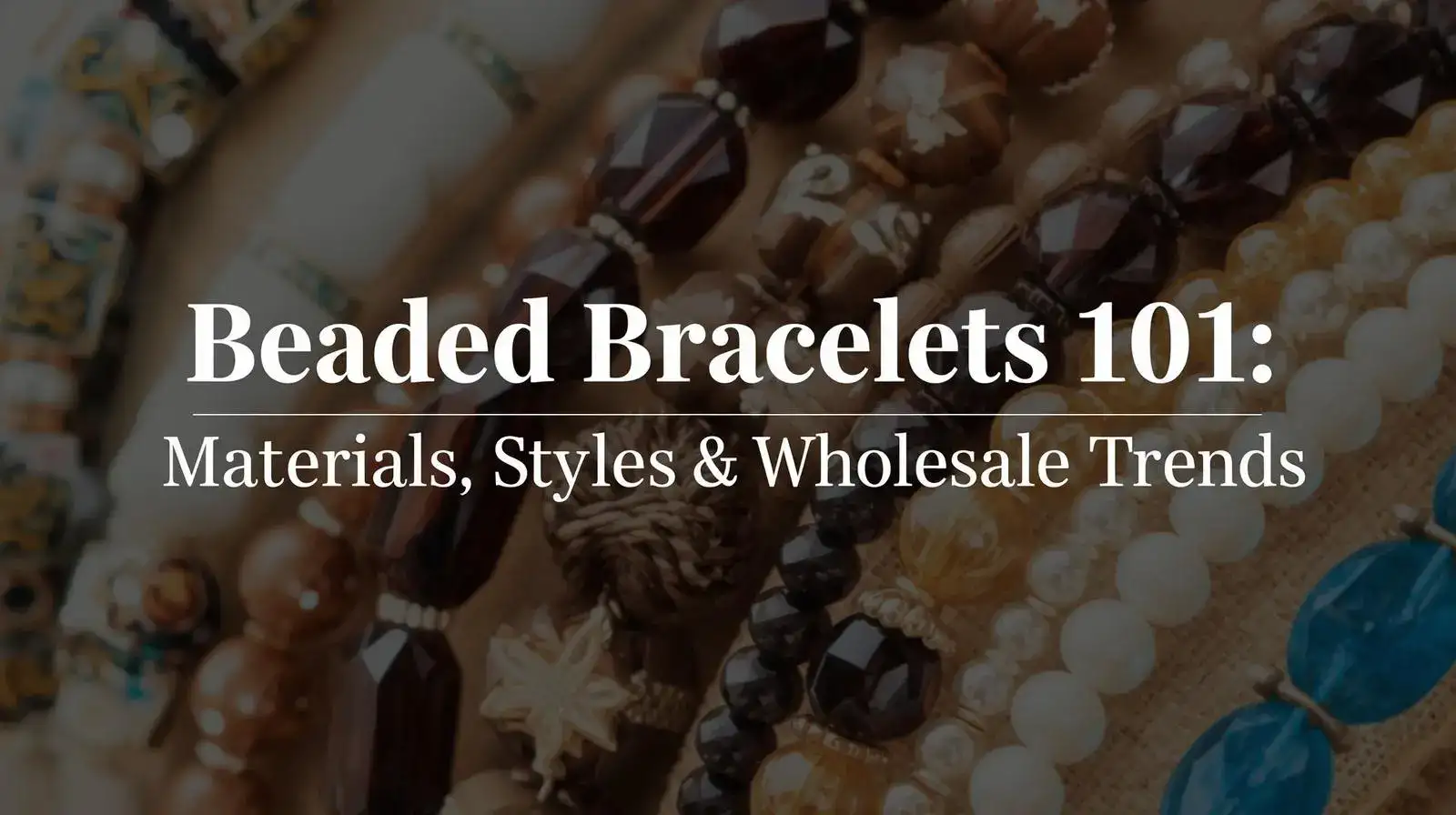
Beaded bracelets are a piece of jewelry that has timeless appeal. New fashion trends emerge, and these beads adapt to them easily by being reshaped and recolored. In jewelry retail, that kind of endurance is rare. Trends burn hot and disappear. Beaded bracelets linger. They sell quietly. Then suddenly. Then again.
For bulk buyers and jewelry stores, this category is not decorative filler. It is the segment that generates continuous revenue. It fills gaps in assortments. It absorbs trend shifts. It cushions revenue when statement pieces stall. Done right, beaded bracelets become dependable inventory; the kind that earns without demanding constant reinvention.
This guide is built to help make smarter buying decisions. Not louder ones.
How Jewelry Stores and Bulk Buyers Should Source Beaded Bracelets
Beaded bracelets are the element of jewelry with the simplest design. All they consist of are beads, a connecting medium, a closure, or a stretch system. That’s it. And yet, within that simplicity lies enormous commercial flexibility.
From a wholesale perspective, beaded bracelets can be likened to a modular product. One design theme can generate dozens of different combinations. For generating a different combination, just change the bead size. Swap the spacer. Lastly, shift the color palette. The core construction remains intact, while the product becomes new.
This is why beaded bracelets sell so well. They can be handcrafted for boutique positioning or mass-manufactured for retail selling. Their design blends well with any kind of purpose, be it as wearable fashion accessories, symbolic jewelry, or a gift piece.
There is also a psychological advantage. Beaded bracelets feel trendy yet affordable. They do not intimidate buyers, and price resistance is lower. Once a person buys a bracelet, they become emotionally attached to it. They have that impulse buy quality and customers are willing to buy more than one, often without planning to. That behavior matters and increases basket size without heavy sales effort.
Beaded Bracelet Materials: A Buyer’s Breakdown
Materials are where strategy shows. Or fails.
Natural Materials (stone, wood, and seed)
Natural beads carry story and sensation. Stone beads such as agate, jasper, onyx, tiger eye, and lava stone sell not just for how they look, but also for their symbolic qualities like grounding, strength, or calm. Even though symbolism is the stuff of legends, it still makes an impression on customers at a subconscious level. Wood beads and seed beads push designs toward the casual and the organic. Shell and mother-of-pearl soften collections and add quiet shine.
Glass and Crystal
Glass and crystal beads play a different role. They bring precision. Czech glass, faceted crystal, and polished glass beads offer consistency that natural materials cannot always provide. For bulk buyers managing colorways across large runs, this predictability is valuable. Glass performs especially well in designs where symmetry and visual rhythm matter.
Metal
Metal beads and spacers have a premium perception in the market. Materials like stainless steel, brass, zinc alloy, and plated metals make the bracelet seem more expensive. You can also try silver bracelets to receive a different look. From a design point of view, they break a repetitive bead pattern and add depth to the design. But there is a downside to using metal beads. Poor plating means that once it rusts, it spoils the whole bracelet’s visual appeal. Buyers should prioritize finishes that resist tarnish and scratching, especially in mid-range collections.
Cord Materials
Then there is the invisible material. Elastic cords. Nylon threads, adjustable sliders, and leather wraps. These components rarely appear in product descriptions, yet they determine long-term satisfaction. Weak elastic kills repeat purchases. Slipping knots create returns. Construction choices here are not technical details. They are commercial safeguards. Try rope bracelets as they look amazing on kids and adults.
Popular Beaded Bracelet Styles in Wholesale Markets
Style governs speed. How fast a bracelet moves. How long does it stay relevant?
Single Strand Beaded Bracelets
Single-strand beaded bracelets are the backbone. They sell steadily. They are easy to source and restock. They fit into almost any retail environment. Their strength lies in volume and consistency, not uniqueness.
Multi-layer and Wrap Bracelets
Multi-layer and wrap bracelets aim for emotional appeal. They create uniqueness and presence on the wrist. These designs often justify higher price points and sell well in curated collections, especially when paired with lifestyle storytelling.
Charm Bracelets
Charm bracelets occupy a powerful middle ground. A small symbol shifts a bracelet from accessory to message. That message might be spiritual, sentimental, or playful. What matters is that it personalizes the product without custom manufacturing.
Stretchable Bracelets
Stretch bracelets and adjustable designs win on practicality. Universal fit removes hesitation. Customers do not ask questions. They try it on. It fits. The sale happens.
Design & Aesthetic Trends Shaping Beaded Bracelet Demand
This is where buying decisions quietly succeed or fail. Not at the display and certainly not at checkout. But here, at design and construction.
Mixed materials lead the market. Single-material bracelets feel flat now. Buyers respond to contrast. Stainless steel next to pearls. Polished stone broken by metal spacers. The mix signals intention. It looks designed, not assembled. For bulk buyers, this matters because mixed-material bracelets raise perceived value without proportionally raising cost.
Color and texture are no longer optional. Neutral still sells, but accents close the sale. A pop of color. A matte bead beside a high-gloss finish. Texture creates movement. It gives the eye somewhere to rest, then somewhere to travel. Wholesale lines that stay too uniform struggle to stand out in crowded assortments.
Durability has become a selling feature. Customers ask questions now. Will it tarnish? Will it stretch out? Materials like 18K gold PVD are able to achieve that with ease. For retailers, durability means fewer returns, fewer complaints, and better reviews. For bulk buyers, it means long-term margin protection.
Adjustable and stretch designs win on practicality. Universal fit reduces SKU complexity. Elastic and adjustable cords remove friction at the point of purchase. If it fits everyone, it sells faster. Simple math.
Personalization drives emotional attachment. Letter beads. “Mama.” Initial charms. Symbols like crosses or infinity signs. These elements turn accessories into meaning. Wholesale buyers benefit because personalization sells without custom production.
Bead Bracelet Styles That Retailers Should Know About
|
Style
|
MOQ (Wholesale)
|
Best-Selling Material Combinations
|
What Sells and Why
|
|
Classic
|
10–50 pieces per design
|
Freshwater pearls with gold-plated stainless steel. Polished gemstone beads with sterling-tone spacers.
|
These bracelets do not chase trends. They last. Customers buy them as gifts. They return for the same look again.
|
|
Bohemian
|
5–30 pieces
|
Natural stones like jasper or turquoise. Wood and seed beads. Mixed metal spacers.
|
Texture matters here. Earth tones sell. Each piece feels made by hand, even when it is not.
|
|
Modern / Chic
|
10–50 pieces
|
PVD-coated stainless steel with matte stone beads. Minimal glass with metal accents.
|
Clean lines. No noise. Buyers want metal that lasts and does not fade with wear.
|
|
Playful / Novelty
|
10–100 pieces
|
Acrylic or glass beads with enamel charms. Butterflies. Evil eyes. Flowers.
|
Color moves fast. These sell on sight. They sell again when the design changes.
|
|
Stacking
|
20–100+ pieces
|
Small gemstone beads mixed with metal spacers and cords. Designed to layer.
|
One bracelet is not enough. Sets sell better. Customers like to choose. Retailers like higher totals.
|
Wholesale Manufacturing & Quality Considerations
Quality control in beaded bracelets is taken seriously. Small flaws can make a big impact on customer perception.
Consistency matters. Beads should match in size and color within a design. Elastic should recover after stretch. Knots should hide cleanly. Spacers should sit flush, not float awkwardly between beads.
Handmade bracelets carry charm, but variability must be controlled. Factory-assembled pieces offer uniformity, but can feel soulless if design is neglected. The strongest wholesale collections balance precision with warmth.
Packaging should not be done just for the sake of it. Bracelets that arrive tangled or unprotected lose value before they reach the shelf. Private-label readiness, like clean finishes, neutral backing cards, and barcode-friendly formats, saves retailers time and friction.
Pricing, MOQs, and Profit Margins for Bulk Buyers
Pricing strategy begins with material honesty. Stone costs fluctuate. Metal finishes add expense. Mixed-material designs often deliver the best margin balance because they elevate perception without multiplying cost.
Minimum order quantities shape risk. Lower MOQs allow testing. Higher MOQs reward confidence. Buyers should align order size with retail velocity, not optimism.
Markups vary by channel, but beaded bracelets support healthy margins because customers judge them emotionally, not technically. They buy how it feels. Not how it’s made.
Current Wholesale Trends in Beaded Bracelets
There are chiefly four developments that bracelet wholesalers and buyers must adapt to solidify their position in the market and succeed.
- Natural materials are gaining ground again. Not loudly. Steadily. Sustainability narratives matter, even when loosely defined. Customers want to feel aligned with their purchases.
- Personalization continues to grow. Initials. Names. Symbolic words. These elements create attachment and justify repeat buying.
- Private-label and white-label models are expanding. Retailers want ownership. Control. Identity. Beaded bracelets offer that without heavy tooling or long lead times.
- Online wholesale platforms increase access, but direct manufacturer relationships still win on flexibility and long-term value.
How Jewelry Stores Should Source Beaded Bracelets Strategically
Smart sourcing is not about chasing trends. It is about building systems. Sampling before scaling. Rotating designs without overhauling collections. Choosing suppliers who communicate clearly and deliver consistently.
Inventory should breathe. Old designs should not suffocate new ones. Forecasting matters, but adaptability matters more.
Conclusion
Beaded bracelets sell when the flash sale fails. They recover when trends collapse. For bulk buyers and jewelry stores, they are not an accessory category. They are a must-have, so get them from us as your beaded bracelet manufacturer to get a variety of bracelets us.
Choose materials wisely. Respect construction. Keep an eye on the design trends, but chasing them blindly is not the correct approach and tends to backfire. When treated as a system rather than a gamble, beaded bracelets do not just sell. They endure.